HomePortfolioSuccess Story: Intelligent Inventory Management in Fashion Retail

Success Story: Intelligent Inventory Management in Fashion Retail

Deliverables
Inventory Optimization
AI Forecasting
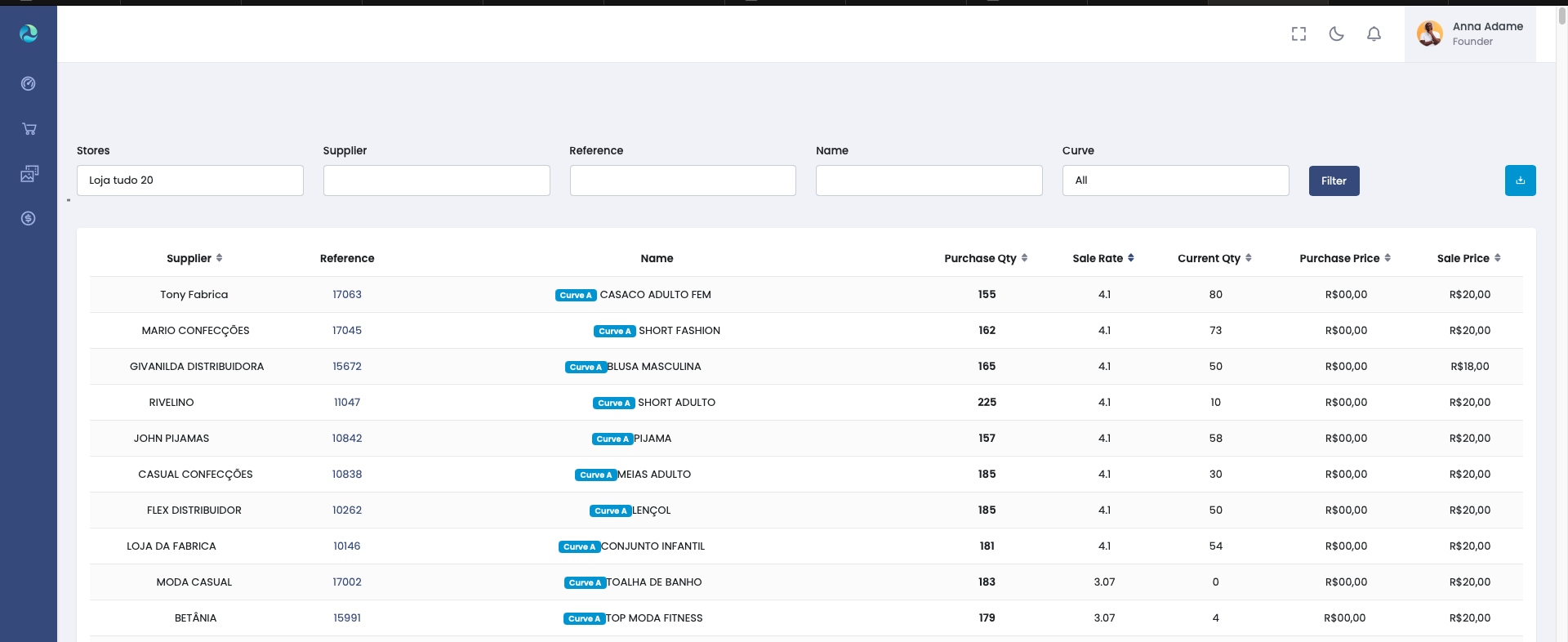
Purchase Reports
Industries

Fashion Retail

The Challenge

Before partnering with Dienekes, the retailer faced a challenge that keeps many store owners up at night: inventory unpredictability.

The store — specializing in women’s, men’s, and children’s clothing, plus beachwear and home textiles — managed around 500 active SKUs, relying on spreadsheets and intuition to guide purchasing decisions.

In practice, that created a dangerous cycle:

  • Best-selling products would sell out too quickly, leaving customers frustrated and empty-handed.
  • And in retail, when a customer can’t find what they want, they don’t wait for restock — they buy from the competitor.

  • Meanwhile, low-rotation items piled up in stock, tying up working capital and shrinking cash flow.

  • Replenishment was reactive, based on urgency and guesswork rather than data.

  • The owner constantly felt one step behind — either running out of key products or overstocking on others.

The result was a fragile balance: a constant struggle between not losing sales and not freezing cash in unsold inventory.

Every purchase was a gamble. Every mistake, a lost opportunity.

Our Approach

To change this reality, Dienekes developed a smart purchasing and inventory forecasting system powered by artificial intelligence and neural network models.

These models automatically analyze:

  • the sales history of each SKU,

  • the performance of departments and categories,

  • and seasonal or behavioral trends throughout the year.

Based on this data, the system produces a predictive purchasing report that precisely indicates how many units of each product should be ordered — ensuring the perfect balance between availability and investment.

Behind its simple, intuitive interface lies a robust architecture capable of processing large volumes of data and detecting patterns invisible to the human eye.

The system continuously learns from sales behavior, becoming increasingly accurate and tailored to each retailer’s unique business rhythm.

The Results

After implementation, the retailer achieved a new level of control and profitability: 

Significant reduction in total inventory investment

Increased sales thanks to consistent product availability

Faster, data-driven replenishment cycles

Predictable purchasing guided by seasonality and trends

More working capital available for growth and marketing initiatives


The store evolved from a reactive operation to a strategic one — where every decision is driven by data, not guesswork.

What did the stakeholders say to us

Preview